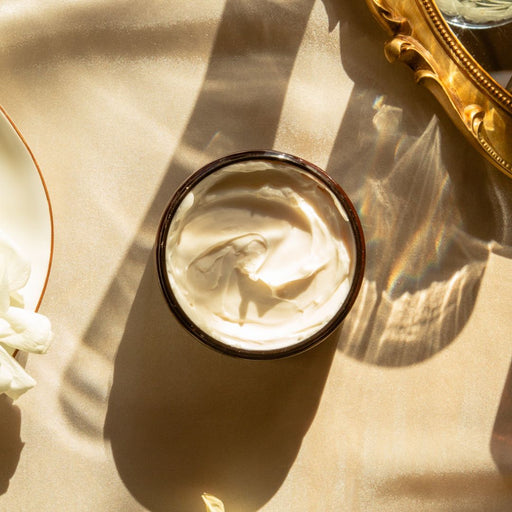
Scent: Fresh and uplifting. Notes of Tiare flower and jasmine with soft magnolia petals, violet leaves, green bamboo, and palm fronds evoke the smell of the dewy tea fields of Indonesia at sunrise.
Texture: Buttery, whipped yet fast-absorbing
Color: Cream
Benefits & Features
Features essential fatty acids with omega-rich candlenut, avocado, and carrot seed oils with antioxidant vitamin E and indulgent Illipe butter. Antioxidant and anti-inflammatory ingredients help protect skin from environmental stress, sun damage, and dry climate.
Has a signature hydrating yet non-greasy feel, leaving skin feeling smooth and velvety.
Directions
This product can be used daily for maximum benefits.Warm the desired amount of product in the palm of your hand, letting it warm just slightly, and then massage creme gently into the skin until it is fully absorbed.
Apply generously on freshly cleansed skin or re-apply any time of day for a boost of moisture.
Ingredients
Candlenut Oil: Moisturizes and softens skin with a non-greasy, velvety feel. Rich in linoleic and linolenic acid, candlenut oil moisturizes and helps mend rough, chapped skin.Rice Bran Oil: Maintains elasticity. Rich in natural Vitamin E and essential fatty acids, rice bran oil intensely hydrate and help maintain youthful elasticity.Avocado Oil: Nourishes and calms. Traditionally used in Indonesia, Avocado Oil is richly hydrating and highly soothing.Illipe Butter: Moisturizes and protects. Provides a cushiony barrier to protect skin from dehydration, hard water and harsh elements.All Ingredients: Water/Eau, Cetearyl Ethylhexanoate, Emulsifying Wax NF, Cyclomethicone, Illipe (Shorea stenoptera) Seed Butter, Candlenut (Aleurites moluccana) Oil, Avocado (Persea gratissima) Oil, Stearyl Alcohol, Rice Bran (Oryza sativa) Oil, Dimethicone, Carrot (Daucus Carota sativa) Seed Oil, Potassium Hydroxide, Carbomer, Fragrance/Parfum, Phenoxyethanol, Caprylyl Glycol, Glycerin, Glyceryl Caprylate, Phenypropanol.
“Lorem ipsum dolor sit amet, consectetur adipiscing elit. Nulla quis diam lorem. Praesent auctor dapibus purus, eu facilisis nunc auctor et. In fermentum nunc et est vulputate malesuada.”
Is your skin itchy, inflamed, or damaged? Don't worry. With the right support, your skin should start healing within days. We explain how you can help your skin heal naturally and quickly.
Key Takeaways
Your skin's surface is a barrier keeping out irritants and locking in moisture.
It can be damaged by sunlight, pollutants, harsh chemicals, and many other factors.
If your skin barrier is damaged, your skin might seem dry, itchy, red, rough, inflamed, and acne-prone.
Damaged skin also often becomes more sensitive to products and touch.
To support your skin's recovery, stick with a simple, repair-focused skincare routine with a gentle cleanser and hydrating moisturizer.
Metta Murdaya, co-founder of JUARA Skincare, says:
"The time it takes for your skin barrier to repair can range from a few days to over a month. It varies based on the severity of the damage and the steps you take to support your skin's recovery."
Your skin is incredibly important. It's like a massive protective shield, keeping your body safe from toxins, irritants, pathogens, and other potentially harmful substances.¹
Like any shield, a damaged skin barrier is less effective. A damaged skin barrier can cause skin inflammation, persistent dryness, and other undesirable outcomes.
That's why it's so important to support our skin's recovery and repair process. By supporting our skin, we can help it recover and prevent further damage.
What Is the Skin Barrier?
Your skin is actually composed of many different layers. The outermost layer is called the epidermis. It's mostly composed of specialized skin cells called keratinocytes, which produce a protein crucial for skin support called keratin.²
The epidermis, in turn, is composed of five different layers. Again, it's the outermost layer that we're most interested in. It's called the stratum corneum.³
If your skin is a shield, the stratum corneum is like the first line of defense. It's sometimes called the "horny layer," because the cells are tougher, like horns.⁴
In this top layer of your skin barrier, specialized skin cells called corneocytes are continuously lost and replaced. This process keeps the stratum corneum functioning properly.
A healthy skin barrier doesn't just keep out unwanted things. It also locks in beneficial things, like water and natural oils that keep our skin hydrated.⁵
It's that dual purpose that makes the skin barrier so crucial. In turn, you can see why a damaged skin barrier can cause issues.
“[The skin] barrier is sometimes underestimated," says dermatologist Dr. Arini Widodo, in conversation with JUARA co-founder Metta Murdaya. "Actually, the barrier is very important, because the skin is a living organ that protects our body.… So we have to make sure our barrier is well-protected with good products."
What Can Compromise Skin Barrier Health
Our skin is a complex, powerful organ. It often does such a good job at protecting us, we don't even realize it.
But like anything, the skin barrier can be damaged. As we'll discuss later, this damage can often be avoided or lessened with the right techniques.
Environmental Factors
Environmental stressors are a very common cause of skin barrier damage.
Sun exposure is probably the most common. After all, almost all of us get sun exposure. That's not inherently bad, either, as sunlight is incredibly important for overall wellness.
However, the UV rays in sunlight can damage the skin barrier. It does this in several ways.
UV rays can directly damage DNA. They can break down the collagen and elastin fibers responsible for keeping your skin firm and tight. And they can generate free radicals, harmful molecules that cause a type of damage called oxidative stress.⁶
Environmental pollutants can also damage the skin barrier. Air pollution, for example, has become increasingly common. It can cause oxidative stress, inflammation, and other issues in the skin barrier.⁷
Another environmental stressor is cold, dry air. Wintery air can strip away moisture from the skin, potentially damaging the skin barrier. That potential damage may be compounded by similarly drying sources of indoor heat.⁸
Other things in the environment have the potential to damage your skin. You've likely experienced at least one of them: insect bites, toxic plants, sharp thorns... Nature might be full of powerful wellness-boosting plants, but it's not without its dangers, too.
External Factors
Other external factors that aren't necessarily part of our environment can also cause skin damage.
For example, harsh chemicals can quickly damage the skin barrier. Particularly harmful chemicals can even cause severe damage called chemical burns.⁹
Harsh products can also irritate, weaken, or even damage the skin barrier. People with dry or sensitive skin may be more likely to experience this. For example, many products use artificial or synthetic fragrances, but research shows these can cause skin irritation and even damage.¹⁰
That's one reason JUARA formulates skincare products with botanical ingredients and natural fragrances in our scented collections.
Other Factors
Plenty of other things can cause a damaged skin barrier.
For example, physical exfoliants can sometimes cause skin barrier damage when used incorrectly, too frequently (over-exfoliating), or on the wrong skin type. Harsh cleansers can also be damaging, especially for people with sensitive skin.
Psychological stress, lack of sleep, and other lifestyle factors can also undermine your skin barrier. Remember, your skin health is linked to your mental and physical health in general. That's why JUARA’s formulations are developed with overall wellness in mind.
Signs of Skin Barrier Damage
As we mentioned, our skin barrier repairs and recovers naturally. In many cases, with the right support, it can recover from many of the factors listed above.
When it can't, it becomes damaged. A damaged skin barrier is often recognizable based on a few common signs.¹¹ Look out for the following:
Dryness: Remember, one of your skin barrier's main roles is locking in moisture. When it's damaged, it can't do this as effectively, causing persistent dryness. It might even become rough, flaky, or even scaly in particularly affected places.
Sensitivity: A damaged skin barrier often becomes more sensitive. If your skin barrier is damaged, you might notice it becoming irritated by products you previously used without issue. It might sting when you apply products or be far more tender than usual.
Inflammation: Damaged skin can become red, puffy, and easily irritated.
Acne: When your skin barrier is damaged, it becomes less effective at protecting from acne-causing bacteria.¹²
Itchiness: You might find your skin is itchier than usual.
These aren't the only signs of skin barrier damage. And many of these signs can be caused by other things. But they're a good place to start if you think your skin barrier might be damaged.
Techniques for a Healthy Skin Barrier
There are two core principles to protecting and healing your skin barrier.
The first is protecting it from any further damage. This might sound counterintuitive, especially if your skin barrier is already damaged. But remember, a compromised skin barrier is more vulnerable to damage, which makes protecting it even more important than usual.
That's just an estimate. Mild damage might only take days to heal. And with the right support, even moderate damage can start to heal within days.
However, the healing process does take time. It's important to be patient. As with many aspects of health, skin repair requires patience and dedication.
Fortunately, the right products and skincare routine can make that process luxurious and enjoyable.
Gentle Cleanser
We all know how important soap is for cleaning. It keeps our hands clean just fine. So why not our face?
"Soap is different than cleansers," explains Dr. Arini Widodo. “[Soap can] strip your skin barrier. It strips off the natural oils on your skin and leaves it tight and dry. So we prefer to use gentle cleansers that calm your skin."
As we mentioned, harsh cleansers can irritate and even damage the skin barrier. To avoid that, consider switching to a gentle, natural cleanser.
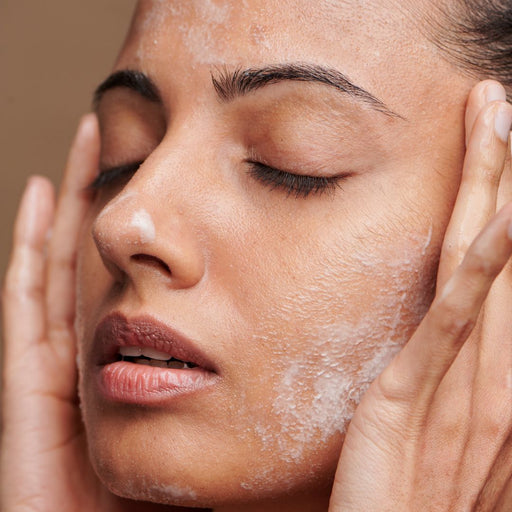
For example, our lightly foaming gel cleanser is formulated with non-stripping, hydrating ingredients and a special, non-irritating fragrance. Similarly, JUARA's Rice Facial Cleanser blends soothing rice proteins with hydrating apple extract to lift away impurities while keeping skin balanced.
Everybody's skin is different, so finding the perfect cleanser might take a little trial and error. You can test a cleanser by applying a little bit to your inner arm or behind your ear and then rinsing it off, as you would when washing your face. Do this for a few days and see how your skin reacts.
Active Ingredients
Skincare products are generally formulated with two kinds of ingredients: active and inactive.
Inactive ingredients are those that don't directly target a specific issue. Water is a common inactive ingredient.
Active ingredients are those that actually target the skin. Ideally, they're the things that help you maintain healthy, glowing skin. Many strong active ingredients, like retinol, are crucial parts of many skincare routines.
However, as we've mentioned, a damaged skin barrier is often more sensitive. Strong active ingredients might be great for a healthy skin barrier, but they can irritate a damaged one.
Moisture Retention
Dryness is both caused by and contributes to skin barrier damage. Hydration, in turn, is crucial for skin barrier healing.
That's why moisturization is so important. Moisturizing after cleansing helps your skin maintain moisture. And hydrated skin is happy, healthy skin.
However, some moisturizers might not work for your skin. Many contain harsh or strong active ingredients and fragrances that might further irritate your skin rather than help it recover.
Instead, look for a gentle moisturizer with natural ingredients. Keep an eye out for hydrating ingredients like hyaluronic acid, ceramides, peptides, niacinamide (vitamin B3), and aloe vera.
Some of these ingredients can also help prevent further damage. Lipids and fatty acids, for example, can help fill gaps in a damaged skin barrier.
Plant oils can also be great for hydration. Argan oil, avocado oil, and candlenut oil are three examples of intensely hydrating oils.
JUARA's Radiance Vitality Oil blends antioxidant-rich, soothing passionfruit oil with a hydrating blend of candlenut, avocado, and macadamia oils.
Sun Protection
Sunlight might be important for overall health, but that doesn't mean we should let it damage our skin. Consider incorporating a gentle sunscreen into your morning skincare routine, even if it's cloudy outside.
Physical barriers to sunlight, like hats and umbrellas, can also help protect your skin.
As nice as a steaming hot shower or bath can be, it's not so nice for your skin. Hot water can strip away the natural oils keeping your skin hydrated. If your skin is already damaged, that can make things worse.¹³
Try to stick to short, lukewarm showers instead.
Of course, a lukewarm shower can be just as luxurious as a hot one, with the right steps. Consider treating yourself to a premium, luxe body oilor smoothing body cream like JUARA's Candlenut Body Creme.
Factors That Influence How Long Skin Barrier Repair Takes
Predicting exactly how long it will take to repair your skin barrier is difficult. It depends on many factors, including:
Damage: More damage or more severe damage will naturally take longer to repair.
Lifestyle: Your daily habits can support or hinder your skin's repair process.
Skin type: Dry skin is more prone to damage and might take longer to heal.
Support: The steps you take to support your skin's recovery can influence how long that recovery process takes.
With consistent care and by following the tips and techniques we listed above, you may see noticeable improvement in a few days. Your skin may fully repair from mild damage within days, too.
But usually, fully restoring your skin's protective shield takes weeks. Remember, recovering from any physical damage takes time. But with the right support, you should see progress.
If you don't, consider going to your dermatologist. They'll be able to figure out what's going on and guide you on your path to full recovery.
Conclusion
Skin barrier repair is a complex process. Fortunately, our skin takes care of most of it. As we sleep, it focuses on repair and recovery.
But there are plenty of things we can do to promote skin barrier repair and to keep our skin barrier healthy. A consistent skincare routine filled with gentle, natural products is one important way to support skin repair. Lifestyle changes, like avoiding hot showers, are another.
The quality and type of ingredients you use can impact how long your skin takes to recover. That's why it's so important to choose high-quality ingredients. JUARA selects ingredients based on both clinical guidance and botanical research.
What Is the Fastest Way to Repair the Skin Barrier?
There's no shortcut to skin barrier recovery. But there are steps you can take to help your skin repair and keep your skin healthy.
First, switch to (or adopt) a skincare routine focused on recovery. Avoid harsh products and overly strong ingredients. Stick to gentle, natural cleansers and moisturizers packed with restorative ingredients.
Second, take care to protect your skin while it recovers. Avoid hot water, strong fragrances, and potential sources of damage like sunlight with a non-irritating sunscreen.
Will a Damaged Skin Barrier Heal Itself?
In general, yes. Your skin is a remarkable organ. With the right support, it can recover from damage in days to weeks.
Stick to a restorative skincare routine with a gentle cleanser and hydrating moisturizer, and try to avoid further damage. You should see an improvement within days.
That said, there is a limit to what our skin can heal. Serious damage might require additional help. If you aren't noticing any improvement, consult with a dermatologist or healthcare professional for more guidance.
What Are the Signs of a Damaged Skin Barrier?
A damaged skin barrier often presents itself with several common signs:
Dryness (including roughness, scaliness, and flakiness)
Juara Skincare incorporates ancient rituals with Western skincare science, creating the ultimate beauty experience. We aim to transport you from the mundane to the extraordinary with our exotic ingredients, intoxicating scents, and powerful, skin-improving formulas. All of our products are nutrient-rich and botanically based. We are proud to be certified cruelty-free. Get the latest skin care tips and info on Juara products by learning more about our founders and following us on Twitter, Facebook, Instagram, LinkedIn, and Pinterest.
Metta Murdaya
Co-founder and CEO
Metta Murdaya is co-founder and CEO of JUARA Skincare, a skincare and beauty company inspired by the Indonesian wellness traditions of Jamu. Her award-winning book, Jamu Lifestyle, captures the essence of the Jamu philosophy, emphasizing the power of healthy, intentional, and joyful living. Guided by a deep commitment to societal betterment, Metta inspires individuals to thrive in mind, body, and spirit. As a wellness speaker and retreat guide, she contributes to the Global Wellness Institute’s Aesthetic Health Initiative and serves on the board of Mentari, supporting trafficking prevention and education initiatives in Indonesia and wellness programs in the U.S.