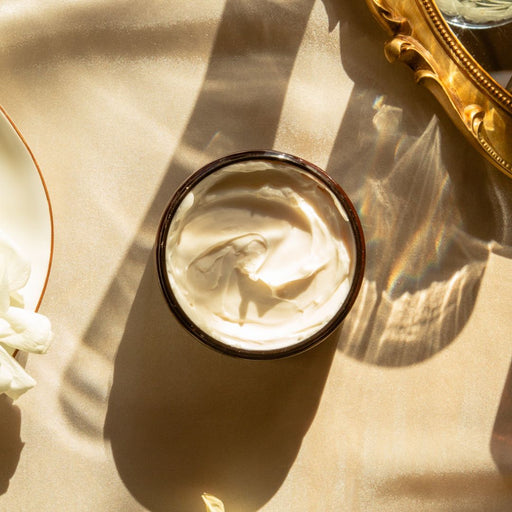
Scent: Fresh and uplifting. Notes of Tiare flower and jasmine with soft magnolia petals, violet leaves, green bamboo, and palm fronds evoke the smell of the dewy tea fields of Indonesia at sunrise.
Texture: Buttery, whipped yet fast-absorbing
Color: Cream
Benefits & Features
Features essential fatty acids with omega-rich candlenut, avocado, and carrot seed oils with antioxidant vitamin E and indulgent Illipe butter. Antioxidant and anti-inflammatory ingredients help protect skin from environmental stress, sun damage, and dry climate.
Has a signature hydrating yet non-greasy feel, leaving skin feeling smooth and velvety.
Directions
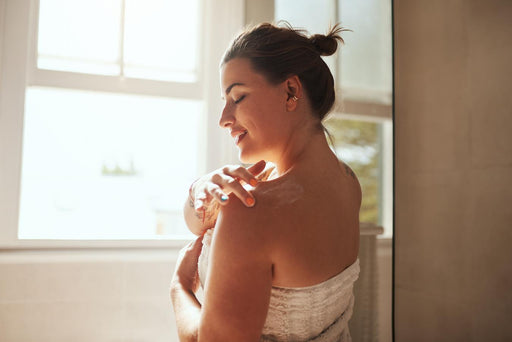
This product can be used daily for maximum benefits.Warm the desired amount of product in the palm of your hand, letting it warm just slightly, and then massage creme gently into the skin until it is fully absorbed.
Apply generously on freshly cleansed skin or re-apply any time of day for a boost of moisture.
Ingredients
Candlenut Oil: Moisturizes and softens skin with a non-greasy, velvety feel. Rich in linoleic and linolenic acid, candlenut oil moisturizes and helps mend rough, chapped skin.Rice Bran Oil: Maintains elasticity. Rich in natural Vitamin E and essential fatty acids, rice bran oil intensely hydrate and help maintain youthful elasticity.Avocado Oil: Nourishes and calms. Traditionally used in Indonesia, Avocado Oil is richly hydrating and highly soothing.Illipe Butter: Moisturizes and protects. Provides a cushiony barrier to protect skin from dehydration, hard water and harsh elements.All Ingredients: Water/Eau, Cetearyl Ethylhexanoate, Emulsifying Wax NF, Cyclomethicone, Illipe (Shorea stenoptera) Seed Butter, Candlenut (Aleurites moluccana) Oil, Avocado (Persea gratissima) Oil, Stearyl Alcohol, Rice Bran (Oryza sativa) Oil, Dimethicone, Carrot (Daucus Carota sativa) Seed Oil, Potassium Hydroxide, Carbomer, Fragrance/Parfum, Phenoxyethanol, Caprylyl Glycol, Glycerin, Glyceryl Caprylate, Phenypropanol.
“Lorem ipsum dolor sit amet, consectetur adipiscing elit. Nulla quis diam lorem. Praesent auctor dapibus purus, eu facilisis nunc auctor et. In fermentum nunc et est vulputate malesuada.”
Every year, more studies are published showing the power of herbs in supporting skin repair, regeneration, and overall health. But with so many different plants to choose from, you might not know where to start. That's why we've created this comprehensive guide to some of the most powerful herbs for the skin.
Key Takeaways
Herbs have been used in skincare around the world for thousands of years.
Today, science has identified the bioactive ingredients that make many herbs such powerful skincare and wellness ingredients.
Different herbs have different potential benefits, which may make them more suitable for people with different skin types or skin needs.
Many herbs, like black tea and turmeric, can protect the skin from oxidative stress and help you maintain a glowing complexion.
Some herbs, like Aloe vera and chamomile, have even been shown to support skin repair and recovery.
"Many herbs have powerful bioactive ingredients that can support healthy skin and even support skin repair. That's why they've been used in skincare and wellness routines for thousands of years."
All around the world, people have been using herbs for skin health for generations. In Indonesia, for example, people have followed the herbal medicine and wellness tradition called Jamu for centuries.
Jamu is rooted in restorative, ritualistic wellness practices that use natural ingredients to support and promote overall well-being. Today, the term Jamu is also commonly used to describe an herbal drink made from many of those natural ingredients, like ginger and turmeric.
In recent decades, research has confirmed the potential benefits of dozens of time-tested herbal remedies.
Different herbs provide different potential benefits. Some have powerful anti-inflammatory properties. Others are great for dry skin and skin irritation. A few have even been shown to aid in skin healing.
Which herbs you choose, whether in a dedicated skincare product or through an at-home remedy, depends on your skin and its needs. After all, everyone's skin is different.
This list contains 10 of the most powerful herbs for skin to help you build your perfect and personalized herbal skincare regimen.
10 Natural Herbs for Skin Health
#1. Turmeric
Turmeric isn't just a kitchen staple. Its active ingredient, Curcumin, has been found to have anti-inflammatory properties. And it's a powerful antioxidant.⁹
For example, turmeric is widely used to help brighten skin.¹⁰ In that sense, it's like vitamin C.¹¹ Little wonder, then, that turmeric and vitamin C are often combined in botanical-based skincare serums.
Turmeric may also help protect the skin from sun damage. One 2025 scientific review noted that research suggests Curcumin can protect the skin from the damage caused by UV rays.¹² For example, one study found that turmeric extract helped prevent a reduction in skin elasticity and the formation of wrinkles caused by UVB exposure.¹³
#2. Aloe Vera
When it comes to herbal skincare, few herbs are more well-known and widely used than Aloe vera. People have been using Aloe vera for thousands of years, from ancient Greece to India, Mexico to Japan, Egypt to China.¹
Today, various studies have confirmed the many benefits of Aloe vera.²
For example, Aloe vera is widely used to soothe irritated skin. You can use an Aloe vera gel or make some at home.³
Research suggests Aloe vera has many other potential benefits. One study found it can support wound healing.⁴ Another found it improves skin elasticity, reducing the appearance of wrinkles.⁵
Jasmine, a type of flowering plant, doesn't just smell great. It's also packed with powerful ingredients that can support skin health.
Research has found that jasmine can soothe inflamed skin and help fight acne.⁶ In one study, jasmine extract was found to have potent antioxidant effects, helping to protect the skin from oxidative stress.⁷
Another study found that jasmine extract could help support aging skin. The extract promoted skin firmness and smoothness, and also helped reduce the appearance of fine lines and wrinkles.⁸
"What I like about it," dermatologist Dr. Arini Widodo says during a discussion with JUARA co-founder Metta Murdaya, “is that it helps to strengthen skin immunity … and defend [from] environmental damage."
JUARA offers two products centering jasmine, a body creme and perfume oil. Both combine this potent herb with other bioactive ingredients, like magnolia petals, candlenut oil, illipe butter, and more to help keep skin soft and smelling great. They’re two examples of how JUARA uses plant-derived ingredients often used in traditional medicine.
#4. Tea
Tea is one of the most potent herbs for skin health. Different kinds of tea provide different potential benefits.
Research has found that white tea can reduce inflammation and prevent collagen breakdown.¹⁴Green tea is a common ingredient in acne treatments because it contains a polyphenolic compound that can help reduce excess oil production.¹⁵ Black teas contain tannins, which can protect the skin from environmental damage and lock in moisture.¹⁶
These are just three of the most popular types of tea. There are many more, each with their own potential benefits.
It’s even possible to combine multiple different teas into a single product. For example, JUARA’s Triple Tea Antioxidant Essence blends white, black, and green tea extracts.
Kombucha, or fermented black tea, is a powerful herbal ingredient used in natural skincare routines. Research has found that kombucha has antibacterial properties, making it a great option for tackling acne.¹⁷ Dermatologist Dendy Engelman says it's "excellent for balancing the skin's microbiome by promoting a healthy ratio of good bacteria."¹⁸
JUARA’s Sweet Black Tea and Rice Moisturizer blends kombucha with complementary bioactive ingredients like rice bran oil and five-flavor berry to protect and hydrate the skin barrier.
#5. Witch Hazel
Witch hazel, or Hamamelis virginiana, is a small tree or shrub native to Eastern North America. People have used it in herbal medicine for hundreds of years. It's used to soothe irritated skin, is applied to insect bites, and can help reduce inflammation.
A 2025 scientific review notes that multiple studies have confirmed witch hazel's anti-inflammatory, anti-bacterial, and antioxidant effects.¹⁹ For example, one 2024 study found that witch hazel can enhance skin barrier function and protect the skin from free radical damage.²⁰
#6. Gotu Kola
Gotu kola is an herb in the parsley family that's played a central role in Ayurveda, the traditional Hindu system of medicine, for thousands of years. It's even nicknamed the "herb of longevity." ²¹
One of its chief uses is maintaining youthful skin.²² Research suggests it can inhibit enzymes that normally break down the skin, can support collagen production, and even protect skin cells from oxidative stress.²³
That makes gotu kola a powerful ingredient for skincare. It’s one of the central ingredients in JUARA’s Sensica Gentle Gel Cleanser. Here, it complements the cleansing and hydrating properties of sodium hyaluronate and ceramides.
#7. Chamomile
Chamomile is often brewed into tea. But it's also a potent herbal skincare ingredient that can soothe sensitive skin, smooth rough skin, and support skin repair and regeneration.²⁴
In one fascinating study, chamomile demonstrated potent healing properties. Small wounds were created and infected with bacteria. Those treated with a chamomile ointment healed in 5.3 days on average, while those treated with antibiotics healed in 6.3 days.²⁵
#8. Rosemary
Rosemary is another herb known for its unique, pleasing scent. It's widely used in cooking, but is becoming an increasingly common herbal ingredient in natural skincare regimes.
Research shows rosemary can help damaged skin and even reduce scarring.²⁶ One 2025 study found that rosemary can improve rough skin, reduce redness, and generally promote a radiant complexion.²⁷
#9. Lavender
Lavender's fragrance is famous for its ability to soothe irritation and reduce stress. It's widely used in essential oils, candles and diffusers.²⁸
But lavender itself has the potential to support healthy skin. Lavender oil, for example, is a powerful antibacterial agent, making it great for treating acne. It's also used to help with skin problems like roughness, dryness, redness, and irritation.²⁹
#10. Ashwagandha
Ashwagandha is an ancient herb used in Ayurvedic medicine. It's an adaptogen, which means it can help the body manage stress.³⁰
It's also a potent skincare ingredient.³¹ Ashwagandha has been shown to help keep skin hydrated, tight, and plump.³²
One double-blind, placebo-controlled study found that Ashwagandha caused improvements in skin hydration and elasticity.³³
Conclusion
Herbs have been used for thousands of years to promote healthy skin and overall wellness. Today, we have the benefit of hundreds of scientific studies confirming (and explaining) the many benefits of the plants our ancestors relied on.
The wide variety of herbs makes herbal skincare particularly powerful, as everyone's skin has its own unique needs. There are herbs that can help with oily skin and others that are great for supporting mature skin. Some herbs, like Aloe vera and chamomile, have shown promise in helping with skin injuries, while others, like black tea, have astringent properties that can help keep skin tight.
The herbs you use depend on your individual skin type and needs. Fortunately, there's no shortage of botanical products out there from which you can choose.
Several herbs have healing properties. Aloe vera, for example, has been shown to help soothe skin and support healing. Chamomile has also been shown to support skin repair.
What Is the Strongest Healing Herb?
There isn't necessarily one single "strongest" healing herb. Different herbs have different uses, and that's true when it comes to healing.
For example, Aloe vera is often used after sunburn because it's intensely hydrating and soothing. Meanwhile, chamomile has been shown to promote wound healing.
What Is a Natural Skin Healer?
Many herbs have healing properties and could therefore be considered natural skin healers. Aloe vera, chamomile, gotu kola, rosemary, witch hazel, and many more herbs have demonstrated healing properties in scientific studies and through anecdotal and historical evidence.
The herb you choose depends on what kind of healing you're looking for. A herb that may help with skin infections, for example, might not be the best option for someone looking to soothe skin irritation.
Juara Skincare incorporates ancient rituals with Western skincare science, creating the ultimate beauty experience. We aim to transport you from the mundane to the extraordinary with our exotic ingredients, intoxicating scents, and powerful, skin-improving formulas. All of our products are nutrient-rich and botanically based. We are proud to be certified cruelty-free. Get the latest skin care tips and info on Juara products by learning more about our founders and following us on Twitter, Facebook, Instagram, LinkedIn, and Pinterest.
Metta Murdaya
Co-founder and CEO
Metta Murdaya is co-founder and CEO of JUARA Skincare, a skincare and beauty company inspired by the Indonesian wellness traditions of Jamu. Her award-winning book, Jamu Lifestyle, captures the essence of the Jamu philosophy, emphasizing the power of healthy, intentional, and joyful living. Guided by a deep commitment to societal betterment, Metta inspires individuals to thrive in mind, body, and spirit. As a wellness speaker and retreat guide, she contributes to the Global Wellness Institute’s Aesthetic Health Initiative and serves on the board of Mentari, supporting trafficking prevention and education initiatives in Indonesia and wellness programs in the U.S.