Scent: Fresh and uplifting. Notes of Tiare flower and jasmine with soft magnolia petals, violet leaves, green bamboo, and palm fronds evoke the smell of the dewy tea fields of Indonesia at sunrise.
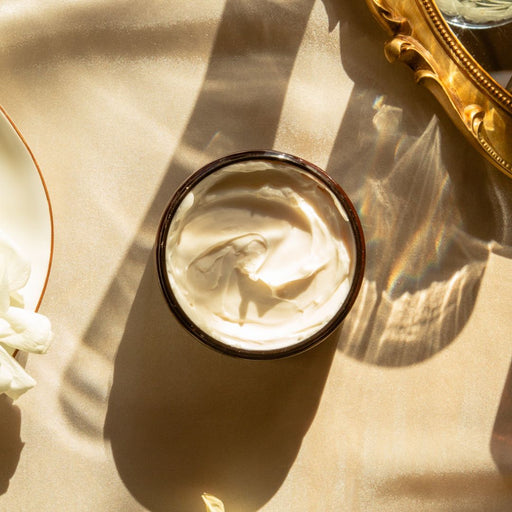
Texture: Buttery, whipped yet fast-absorbing
Color: Cream
Benefits & Features
Features essential fatty acids with omega-rich candlenut, avocado, and carrot seed oils with antioxidant vitamin E and indulgent Illipe butter. Antioxidant and anti-inflammatory ingredients help protect skin from environmental stress, sun damage, and dry climate.
Has a signature hydrating yet non-greasy feel, leaving skin feeling smooth and velvety.
Directions
This product can be used daily for maximum benefits.Warm the desired amount of product in the palm of your hand, letting it warm just slightly, and then massage creme gently into the skin until it is fully absorbed.
Apply generously on freshly cleansed skin or re-apply any time of day for a boost of moisture.
Ingredients
Candlenut Oil: Moisturizes and softens skin with a non-greasy, velvety feel. Rich in linoleic and linolenic acid, candlenut oil moisturizes and helps mend rough, chapped skin.Rice Bran Oil: Maintains elasticity. Rich in natural Vitamin E and essential fatty acids, rice bran oil intensely hydrate and help maintain youthful elasticity.Avocado Oil: Nourishes and calms. Traditionally used in Indonesia, Avocado Oil is richly hydrating and highly soothing.Illipe Butter: Moisturizes and protects. Provides a cushiony barrier to protect skin from dehydration, hard water and harsh elements.All Ingredients: Water/Eau, Cetearyl Ethylhexanoate, Emulsifying Wax NF, Cyclomethicone, Illipe (Shorea stenoptera) Seed Butter, Candlenut (Aleurites moluccana) Oil, Avocado (Persea gratissima) Oil, Stearyl Alcohol, Rice Bran (Oryza sativa) Oil, Dimethicone, Carrot (Daucus Carota sativa) Seed Oil, Potassium Hydroxide, Carbomer, Fragrance/Parfum, Phenoxyethanol, Caprylyl Glycol, Glycerin, Glyceryl Caprylate, Phenypropanol.
“Lorem ipsum dolor sit amet, consectetur adipiscing elit. Nulla quis diam lorem. Praesent auctor dapibus purus, eu facilisis nunc auctor et. In fermentum nunc et est vulputate malesuada.”
Unsure if your exfoliation ritual is helping or harming your skin? Read on for the five key signs you might be over-exfoliating, and the science-backed ways to avoid damaging your skin.
Key Takeaways
Over-exfoliation can irritate and even damage your skin.
Signs of over-exfoliation include sensitivity, irritation, tightness, and breakouts.
To avoid over-exfoliation, make sure to limit exfoliation to 1-3 times per week, and avoid products with harsh synthetic ingredients.
Metta Murdaya, co-founder of JUARA Skincare, says:
"Exfoliating too much or too harshly can irritate or even damage your skin. Signs of over-exfoliation include sensitivity, irritation, breakouts, and tightness."
Exfoliation is widely used to help support skin health. It's an important step because your skin is constantly replacing itself. In fact, the average human sheds over half a million skin cells every single day.¹
If these cells are allowed to build up on your skin, they can cause various problems. Dead skin cells can cause clogged pores, potentially contributing to acne. They can cause the skin to appear rough, bumpy, or thick.
Exfoliating is the process of removing dead skin cells. Studies show that exfoliation can smooth skin texture, reduce the appearance of pores, increase collagen production, support hydration, and more.² It can help with all kinds of skin types, including oily skin, acne-prone skin, and even sensitive skin.³
In short, exfoliated skin can look smooth, fresh, and healthy.
But that's only if you exfoliate properly. Unlike some parts of the skincare routine, exfoliation needs to be approached with care. Over-exfoliation can cause a host of issues, from irritation and sensitivity to outright damage.
We'll cover best practices for exfoliation later. But everyone's skin is different, and some people may be more sensitive to exfoliation than others. That's why it's so important to be aware of the signs of over-exfoliation.
As we mentioned, over-exfoliation can cause a wide range of problems. At the extreme, it can seriously damage the skin. To avoid that, it's crucial you pay attention to the following warning signs.
#1. Increased Sensitivity
One of the earliest signs is sensitivity. When you over-exfoliate, you run the risk of stripping away healthy skin cells as well as dead ones.
One 2024 review identified over-exfoliation as a key cause of sensitive skin, which affects half the population. In other words, research suggests that for many people, sensitive skin is actually over-exfoliated skin.⁴
By stripping away healthy skin, over-exfoliation undermines the functioning of your skin barrier. That's the outer layer of your skin, called the stratum corneum. Your skin's protective barrier locks in moisture and protects you from harmful external substances.
When your natural protective barrier is disrupted, your skin may become more sensitive. One key sign you might have over-exfoliated skin is if it starts to react poorly to skincare products that previously worked fine. This is especially true if your skin reacts to gentle skincare products.
#2. Burning Sensation
The next step up from sensitivity is an irritated skin or a burning sensation. This might occur when applying products, or even when you simply wash your face with water.
While burning is a common side-effect of chemical peels, it is absolutely not normal for healthy skin.⁵ It's caused by a weakened skin barrier, and is a key sign you have over-exfoliated your skin.
#3. Redness and Flaking
Another important sign of over-exfoliation is a major change to your skin's natural texture.
As we mentioned, one of the main benefits of exfoliation is smoothing out otherwise rough skin. But too much exfoliation can impact your skin's texture in harmful ways.
Excessive exfoliation can cause tiny, possibly imperceptible cracks in your skin. This damage to your skin barrier can cause redness and inflammation. In people with particularly sensitive skin, over-exfoliation can even burst tiny blood vessels underneath the skin, potentially causing dark patches.⁶
When your skin's moisture barrier is damaged or undermined, it becomes less effective at retaining hydration. This can cause dry skin, or even peeling and flaky skin.⁷
A similar sign of over-exfoliated skin is a waxy appearance. This one can be difficult to spot, because it can be mistaken for the glassy, glowing skin you want to achieve through exfoliating. Too much exfoliating can scrub away your skin's natural oils without giving it time to replace them, exposing the vulnerable underlying skin.⁸
These problems can be exacerbated by not protecting the newly exposed skin with a moisturizer or body cream.
#4. Breakouts
By disrupting your protective skin barrier, over-exfoliation can actually make your skin more susceptible to breakouts. That's because the compromised skin barrier is less able to defend against the bacteria that are often the cause of acne.⁹
Another reason is that a damaged skin barrier sometimes tries to compensate for the removed oil by putting oil production into overdrive. All that excess oil, plus the damaged skin, can lead to clogged pores and additional breakouts.
#5. Tightness
If your skin feels tight after washing, there's a chance you might be over-exfoliating. Tightness is a key symptom of dry skin, and as we explained, over-exfoliating can prevent your skin from retaining and replenishing moisture.¹⁰
Avoiding Over-Exfoliated Skin
If you think you might be over-exfoliating, the first thing to do is stop exfoliating immediately. Give your skin time to heal and support it with gentle products and rich lotions from head-to-toe.
Once your skin is fully healed, you can begin incorporating exfoliation into your skincare routine. But what's the best way to do that?
How Often Should You Exfoliate?
The first step is knowing how often to exfoliate. Unlike other parts of your routine, like moisturizing, you shouldn't exfoliate every day. In fact, experts generally recommend exfoliating once or twice per week.¹¹
Of course, that may vary between different individuals. For example, people with particularly oily skin may need to exfoliate a little more than others. Those with sensitive or dry skin might need to exfoliate less often.¹²
Physical Exfoliation vs. Chemical Exfoliation
The next step is choosing the right exfoliants. There are two types: Physical exfoliants and chemical exfoliants.
Physical exfoliants use tiny particles to physically scrub away dead skin cells. These particles might be salt, sugar, or crushed up walnuts.
Chemical exfoliants use enzymes and acids to loosen the bonds keeping dead skin cells stuck to your face. Some of these acids are soluble in water, and are called alpha-hydroxy acids; examples include glycolic acid and lactic acid. Others are soluble in oil, and are called beta-hydroxy acids; one popular example is salicylic acid.
Both types of exfoliation have their advantages. Research suggests that physical exfoliation can improve skin tone and may stimulate collagen production. Chemical exfoliants are generally considered milder, making them potentially safer for people with more sensitive skin.
Where to Get Gentle Products
Whatever exfoliant you decide to use, make sure you choose one that's high-quality. Try to avoid harsh, synthetic ingredients, which may further irritate or damage your skin. Instead, consider looking for natural ingredients with skin-supporting compounds.
JUARA formulates its skincare products using botanical-based ingredients.
For the best of both exfoliants, consider JUARA's Radiance Enzyme Scrub. It contains natural bamboo and jojoba beads, which polish skin without causing any micro-tears. These are combined with apple fruit enzymes to help improve tone, texture, and clarity.
The beads "are very fine, which means they don't scratch up your skin," explains JUARA co-founder Metta Murdaya. "They leave a nice, gentle feeling." Enzyme scrubs are easy to use, and good for your skin.
In a trial, 99% of participants said just one application of this scrub promoted better absorption of other skincare. And over 90% said their skin felt more healthy-looking. After four weeks of use, 95% of participants described their skin as feeling refined, soft, smooth, and supple.
Another great option is JUARA's Invigorating Coffee Body Scrub. Derived from an Indonesian treatment that stimulates blood flow in the skin, this scrub contains Sumatra coffee beans to help even out rough skin and promote collagen production. It also happens to smell amazing!
Conclusion
Exfoliation is an important skincare step that brings many potential benefits. Over-exfoliation, however, can cause a number of issues. It's important to watch out for the signs of over-exfoliation to avoid damaging your skin.
Frequently Asked Questions
How Do You Know If You Over-Exfoliate?
Key signs of over-exfoliation include sensitivity, irritation, redness, tightness, dryness, and a burning sensation. Over-exfoliation can also worsen breakouts and cause flaky patches.
How Long Does it Take for Over-Exfoliated Skin to Heal?
Over-exfoliated skin usually takes a few weeks to heal, but the exact time frame depends on how severely it was damaged. In mild cases, skin might recover in days; more serious cases could take a month, which is the length of a full skin cell turnover cycle.
How to Fix an Over-Exfoliated Face?
The first step in addressing over-exfoliation is to stop exfoliation immediately. Switch to gentle products, if you aren't already using them, and make sure to protect your healing skin barrier with a high-quality moisturizer.
Juara Skincare incorporates ancient rituals with Western skincare science, creating the ultimate beauty experience. We aim to transport you from the mundane to the extraordinary with our exotic ingredients, intoxicating scents, and powerful, skin-improving formulas. All of our products are nutrient-rich and botanically based. We are proud to be certified cruelty-free. Get the latest skin care tips and info on Juara products by learning more about our founders and following us on Twitter, Facebook, Instagram, LinkedIn, and Pinterest.
Metta Murdaya
Co-founder and CEO
Metta Murdaya is co-founder and CEO of JUARA Skincare, a skincare and beauty company inspired by the Indonesian wellness traditions of Jamu. Her award-winning book, Jamu Lifestyle, captures the essence of the Jamu philosophy, emphasizing the power of healthy, intentional, and joyful living. Guided by a deep commitment to societal betterment, Metta inspires individuals to thrive in mind, body, and spirit. As a wellness speaker and retreat guide, she contributes to the Global Wellness Institute’s Aesthetic Health Initiative and serves on the board of Mentari, supporting trafficking prevention and education initiatives in Indonesia and wellness programs in the U.S.