As longevity becomes more technologically sophisticated, Indonesia's evolving Jamu tradition offers a reminder: the practices that help us live well must also be meaningful, sensory, and desirable enough to sustain.

There are mornings when I can tell, before I've looked at anything, that I haven't taken care of myself. Not because a wearable told me so. Because of how my face feels when I finally touch it — tight, tired, a little far away from me, like it belongs to someone who's been somewhere else all week.
I've spent enough time now in rooms full of biomarkers and blood panels to know how much the longevity industry can tell us about our own bodies. Biological age. Metabolic risk. Sleep architecture down to the minute. It is genuinely remarkable, and I don't say that as a polite preamble before the "but." I mean it. We can now see further into our own future health than at almost any point before this.

And yet none of that machinery answers the question I keep circling back to, the one that feels almost embarrassingly simple: how do we make caring for ourselves something we actually want to keep doing — not for a ninety-day protocol, but for the rest of our lives?
This is the question Jamu has been quietly answering for a very long time. Long before anyone was measuring biological age, someone in my family was measuring something else entirely — whether the jamu tasted right, whether the body felt lighter after, whether this was a practice worth handing down.
The Quantified Promise of Longevity
The modern longevity world is, at its best, extraordinary. It has given us diagnostics that catch disease before it announces itself. It has given us frameworks for thinking about ageing as something we can influence rather than simply endure. Supplements, protocols, imaging, optimization — all of it valuable, all of it hard-won.
But it is built, almost entirely, around what can be measured. And measurement, however precise, has never been the same thing as a life someone actually wants to live.
The Gap Nobody Puts on a Dashboard
I think about this as an adherence problem before I think about it as a philosophical one. You can hand someone a perfect protocol — improve this marker, correct that deficiency — and still lose them within a month, because the plan was never designed to be lived with. It was designed to be followed. And following is exhausting in a way that living, when it's done right, isn't.
Jamu starts from the opposite direction. It was never a program you complete. It's woven into the ordinary hours of a day — what you drink when you wake up, what you put on your skin before bed, the pause you take before either. Prevention isn't an appointment on a calendar. It's texture. It's what your Tuesday already feels like.
So I don't think the answer is to trade diagnostics for ritual. I think it's this: diagnostics tell us what needs attention. Ritual is what makes the attention repeatable. And longevity, more than almost anything else in health, depends on what we're willing to repeat for years — not on what we know for one afternoon in a doctor's office.
Jamu as a Living System, Not a Museum Piece

Outside Indonesia, Jamu tends to get flattened into "turmeric drinks" or "herbal remedies" — a category, a shelf, a wellness-aisle ingredient. Inside the tradition, it's something much wider: a whole orientation toward care that includes what you consume, what you apply, how you touch and are touched, who prepares it for you, and what it means to pass that knowledge from one pair of hands to the next.
The World Health Organization's current definition of traditional medicine actually gives this argument more room than it used to. Traditional systems, in that framing, aren't relics — they're described as continuing to evolve, in WHO's words, "with science for current use." It's a small phrase, but I find myself returning to it, because it means Jamu doesn't have to choose between being ancient and being alive. UNESCO's recognition of Jamu wellness culture points the same direction — knowledge and practice tied to natural materials, to community, to the specific act of one generation teaching another.
So the honest way to describe Jamu isn't "old recipes." It's a wellness tradition that keeps evolving — and one that has something worth bringing into how we design health today. What would it mean, I sometimes wonder, if we let a five-hundred-year-old practice help us design something as new as a longevity clinic?
Six Things Jamu Has to Offer
Longevity as a way of living, not a series of interventions. Most longevity plans start with a test and end with a protocol. Jamu starts with the day itself — what you already do, taste, smell, feel — and builds care into that. The goal isn't to abandon the testing. It's to remember that a life sustained for decades needs more scaffolding than a chart of your numbers.
Pleasure isn't the reward for discipline. It can be the mechanism of it. I don't think enough people say this out loud: if a practice feels good, you'll return to it. Warmth, scent, touch, the quiet minute of a bath or a ritual shared with someone else — none of that is decoration around "real" health. It's often the reason the health behavior survives past the first week. A facial isn't proof of a longer life. But it can be the felt, immediate expression of a much larger habit of caring for yourself — and that feeling is doing real work, even if no lab can measure it.

Healthspan should include how you actually feel, not only your risk of disease. You can have excellent labs and still feel disconnected, flat, unable to enjoy the very life those labs are meant to protect. Isn't that its own kind of failure, even if nothing shows up on the chart? WHO's own definition of healthy ageing is about maintaining functional ability — the capacity to do what you value, to participate, to relate to people — not simply the absence of illness. Jamu keeps asking a version of that question that clinical medicine rarely asks out loud: am I in balance? Do I have vitality? Does this practice restore my relationship with myself, and with the people and place around me?
You are not separate from your senses or your environment. It's easy for longevity to become an entirely internal conversation — cells, pathways, organs. Jamu widens the frame. Wellbeing happens in relationship: to the people who prepare something for you, to the plants it comes from, to the room you're in when you receive care. A clinic isn't just a container for procedures. Light, scent, hospitality, the way you're spoken to — all of it decides whether care feels clinical or feels like something you actually want.
Personalization can start with the person, not only their data. Precision medicine personalizes through genetics, biomarkers, imaging. Traditional care personalizes through something more immediate — how depleted you feel today, your digestion, your sleep, what season and stage of life you're in, how your body responds to something in this particular moment. I'm not suggesting these categories are biomedically interchangeable with lab values. I'm suggesting they ask a different, equally serious question: not just what does the biology indicate, but what is this person actually experiencing, and what form of care fits into the life they're living.
A tradition stays alive by evolving, not by staying still. Preserving Jamu was never about repeating every historical practice unchanged. It also isn't about extracting one ingredient, putting it in a capsule, and calling that progress. A living tradition evolves — through better formulation, safety, science, new formats, new contexts — while keeping something underneath recognizable. The real question isn't how do we keep this exactly as it was. It's which principles have to survive translation for something to still, honestly, be Jamu.
Where This Becomes Real, Not Theoretical
I think about this most concretely through JUARA, and through what we're building at Yunara.

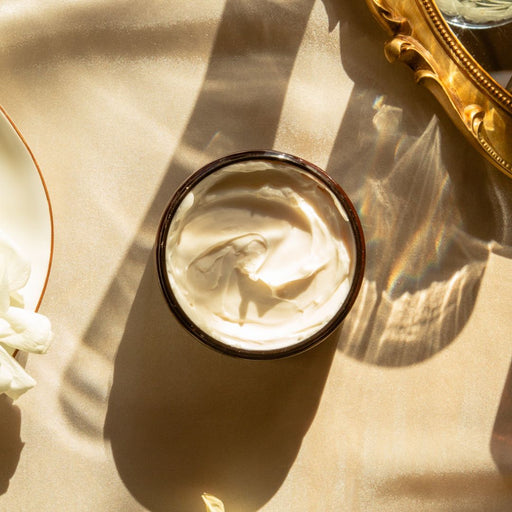
At Yunara, Jamu doesn't show up as a historical treatment airlifted into a New York clinic. It shows up as a living philosophy, translated — through JUARA's formulations, through the hands giving a facial, through a space where clinical care and genuine pleasure are allowed to sit next to each other instead of competing for the same hour.
The clinic can measure your health. The Jamu-informed experience is what helps you feel, in your body, what caring for yourself over decades might actually be like. JUARA gives that longevity proposition its senses and its culture. Neither one replaces the other.
What I’m Not Claiming
I want to be careful here, because it would be easy to overreach. Jamu is not an anti-ageing cure. A facial is not healthcare just because it happens inside a longevity clinic. And lived tradition is not the same kind of evidence as a clinical trial — I would never claim otherwise, and I don't think Jamu needs me to.
What I am claiming is narrower, and I think more useful: Jamu offers principles for designing a fuller longevity experience. Science still decides which specific interventions and claims hold up. That boundary is what lets me be ambitious about the philosophy without being careless about the medicine.
Where This Leaves Us
The next real advance in longevity, I suspect, won't come only from another biomarker or another intervention. It will come from designing care that people actually want to return to — care that feels restorative rather than assigned.
Science can help us understand how to extend healthspan. But living traditions like Jamu are what help us think about what those extra years are actually for — what we want them to feel like, day to day, in the body we're living in.

I still have mornings when I catch my reflection and know, instantly, that I've let something slip. But more and more, I have the other kind too — where I meet my own face and it feels, simply, like mine. That difference was never going to show up on a lab report. Jamu taught me to look for it anyway.
Jamu doesn't hand the longevity industry another biohack. It hands it a more human definition of what success even means.