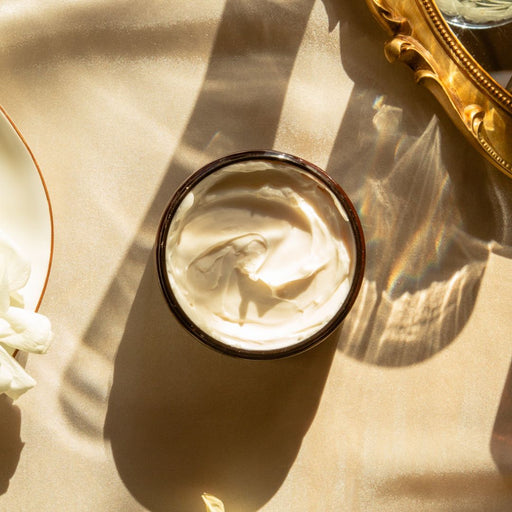
Scent: Fresh and uplifting. Notes of Tiare flower and jasmine with soft magnolia petals, violet leaves, green bamboo, and palm fronds evoke the smell of the dewy tea fields of Indonesia at sunrise.
Texture: Buttery, whipped yet fast-absorbing
Color: Cream
Benefits & Features
Features essential fatty acids with omega-rich candlenut, avocado, and carrot seed oils with antioxidant vitamin E and indulgent Illipe butter. Antioxidant and anti-inflammatory ingredients help protect skin from environmental stress, sun damage, and dry climate.
Has a signature hydrating yet non-greasy feel, leaving skin feeling smooth and velvety.
Directions
This product can be used daily for maximum benefits.Warm the desired amount of product in the palm of your hand, letting it warm just slightly, and then massage creme gently into the skin until it is fully absorbed.
Apply generously on freshly cleansed skin or re-apply any time of day for a boost of moisture.
Ingredients
Candlenut Oil: Moisturizes and softens skin with a non-greasy, velvety feel. Rich in linoleic and linolenic acid, candlenut oil moisturizes and helps mend rough, chapped skin.Rice Bran Oil: Maintains elasticity. Rich in natural Vitamin E and essential fatty acids, rice bran oil intensely hydrate and help maintain youthful elasticity.Avocado Oil: Nourishes and calms. Traditionally used in Indonesia, Avocado Oil is richly hydrating and highly soothing.Illipe Butter: Moisturizes and protects. Provides a cushiony barrier to protect skin from dehydration, hard water and harsh elements.All Ingredients: Water/Eau, Cetearyl Ethylhexanoate, Emulsifying Wax NF, Cyclomethicone, Illipe (Shorea stenoptera) Seed Butter, Candlenut (Aleurites moluccana) Oil, Avocado (Persea gratissima) Oil, Stearyl Alcohol, Rice Bran (Oryza sativa) Oil, Dimethicone, Carrot (Daucus Carota sativa) Seed Oil, Potassium Hydroxide, Carbomer, Fragrance/Parfum, Phenoxyethanol, Caprylyl Glycol, Glycerin, Glyceryl Caprylate, Phenypropanol.
“Lorem ipsum dolor sit amet, consectetur adipiscing elit. Nulla quis diam lorem. Praesent auctor dapibus purus, eu facilisis nunc auctor et. In fermentum nunc et est vulputate malesuada.”
If you've tried every product but still have dry skin, chances are you need to focus on the inside. There are some surprisingly simple ways to support your skin's hydration from within, which you can add to your skincare routine in minutes.
Key Takeaways
It's important to support skin hydration from the outside and inside.
Key tips include staying hydrated, eating a balanced diet rich in good fats and skin-supporting nutrients, and getting enough quality sleep.
You can also help your skin lock in moisture with natural oils and night creams.
Combine these inside-out techniques with your favorite skincare products to support and enhance your skin's natural moisture barrier.
Metta Murdaya, co-founder of JUARA Skincare, says:
"Skincare products are great for supporting skin hydration. But it's also important to support your skin from the inside out. That includes drinking water, eating well, and getting enough sleep."
Dry skin is one of the most common skin complaints. Chances are you've experienced it at some point. And if you haven't, you likely will at some point, as skin hydration naturally declines with age.
Keeping your skin hydrated is central to skin health. High-quality skincare products can certainly help with that.
But there are also ways you can support your skin's moisture barrier from within. Combining these inside-out techniques with your favorite topical products is an excellent way to support and enhance skin hydration.
Some of these techniques might sound obvious. Drink water. Eat healthy. Get enough sleep.
They're also good tips for supporting overall wellness.
But there are nuances that you might not be aware of. For example, some foods and drinks can help hydrate skin far more effectively than others.
We'll also cover some underrated skincare techniques that can help lock in moisture and prevent moisture loss. You can decide whether these techniques deserve a spot in your skincare routine.
Supporting Your Moisture Barrier
Your skin barrier, the outermost layer of your skin, is responsible for keeping out potentially harmful substances.
It's also responsible for preventing water loss.
Think of the skin barrier as a sort of brick wall. Hardened dead skin cells are surrounded by a "mortar" of lipids, including fatty acids.
Underneath this thin layer are further layers of skin. They contain other helpful substances, like collagen, which also contribute to water retention.
Like any wall, your skin barrier can become damaged. And like any wall, it can benefit from care from both sides. That is, you can support it from both the outside and the inside.
"The barrier is sometimes underestimated," explains dermatologist Dr. Arini Widodo, in conversation with JUARA co-founder Metta Murdaya. "It's the shield toward the environment, the first defense of our body. So we have to make sure our barrier is well protected with good products."
Signs of Dehydrated Skin
When your skin barrier is damaged, it often retains less moisture. In fact, persistent dryness is one of the most common signs of a damaged moisture barrier.
Other signs include sensitivity, redness, itching, and acne.
Dry skin can feel tight, particularly after it gets wet. It might feel rough, flaky, or scaly. When particularly dry, it can develop lines or cracks.
That's a very different picture from the healthy, smooth, supple skin we typically want.
Remember, your skin barrier is also a layer of protection against potentially harmful substances. When it's damaged, it can become less effective at that role, too.
Topical products can be fantastic. But many only work on the outermost part of the skin.
For full hydration, we need to go deeper. And that sometimes requires starting from the inside.
#1. Drink Water
The most basic, fundamental tip is to drink enough water. After all, water makes up more than half your body weight.
Your skin barrier relies on water for structure and function. Specifically, it's necessary to maintain the proper structure of the "mortar" we described above.
Unfortunately, almost half of Americans don't drink enough water.
How much water you need to stay hydrated varies depending on a lot of factors, including size, climate, and physical activity. Experts generally recommend aiming for 11.5 cups to 15.5 cups of fluid per day. That includes all sources of fluid, like food and non-water beverages.
For many people, it's often easier to just drink when they feel thirsty rather than aiming for a generic goal.
One way to help yourself drink enough fluids is by varying how you get them. There are plenty of delicious, hydrating drinks out there. You could make a time-tested Jamu tonic, mix a cup of honey and mint Tolak Angin, or brew a soothing mug of green tea.
#2. Eat Healthy
A good proportion of our daily fluid intake comes from foods. But that's only true if you eat hydrating, healthy foods.
Many fruits and vegetables are made up almost entirely of water. Cucumber, lettuce, celery, zucchini, tomatoes, bell peppers, berries, watermelon... All of these examples are more than 90% water.
Many of these fruits and vegetables also contain minerals, vitamins, and other skin-supporting ingredients. Antioxidants, for example, can help protect the skin barrier from damage.
Another thing to look out for is healthy fats. Your skin barrier relies on good fats and essential fatty acids for its structure and function. Some sources of these fats include olive oil, flax seeds, and candlenuts.
#3. Get Enough Sleep
Sleep is when your body shifts into repair mode. It's a crucial time for your skin to recover from all the damage it encountered during the day.
For example, during sleep, collagen production naturally increases. Not getting enough sleep can interrupt this process and undermine skin hydration.
Experts generally recommend aiming for at least seven hours of sleep per night. That said, different people often find they need different amounts.
One way to support sleep is with a tailored bedtime skincare routine. An evening self-care ritual can help you prepare yourself (and your skin) for a restful night's sleep.
#4. Prevent Water Loss
Sleep might be important for skin repair, but it can also be a time of intense water loss. In fact, your skin loses 25% more moisture overnight than it does during the day.
That process is called transepidermal water loss. It's completely natural, but still contributes to skin dryness.
One way to counter it is with a rich night cream. By applying it before bed, you can help lock in moisture.
A high-quality cream should also contain additional ingredients to support skin health and hydration overnight. For example, JUARA's Miracle Tea Recovery Creme for Menopausal Skin contains Spanish lavender to enhance hydration. It also has bio-retinol, a plant-based alternative to retinol, to support elastin production and smooth skin.
#5. Apply Natural Oils to Damp Skin
Another great way to lock in moisture is with a natural oil. These oils don't add water to skin, but they can help your skin's moisture barrier prevent water loss.
Experts generally recommend applying natural oils to damp skin. That helps lock in even more moisture.
Some natural oils contain skin-supporting compounds, like antioxidants and essential fatty acids. For example, candlenut oil is rich in omega fatty acids. These can help support your skin's natural sebum production, which is important for maintaining skin hydration.
Your skin naturally produces hyaluronic acid. It does so while you sleep, which is another reason getting enough sleep is important for skin hydration.
But you can support that natural production by taking hyaluronic acid supplements. Some foods are naturally rich in hyaluronic acid or related compounds. Examples include bone broth, oranges, kale, tofu, almonds, and sweet potatoes.
Of course, hyaluronic acid can also be helpful when applied topically. Look out for skincare products that contain it.
As we've mentioned, healthy fats are crucial for skin health. Essential fatty acids play a key role in the structure and function of the moisture barrier.
Eating foods rich in good fats, like omega fatty acids, can support and enhance skin hydration. Examples include fatty fish, walnuts, and chia seeds.
Essential fatty acids can also be helpful when blended into topical products. For example, JUARA's Radiance Vitality Oil contains a blend of natural oils rich in essential fatty acids to help rebuild your skin's lipid barrier.
Conclusion
Skin hydration is crucial for skin health and overall wellness. It's important to hydrate your skin from the outside with high-quality, hydrating products, like moisturizers.
But it's also important to hydrate from the inside, too. There are also ways to support your body's ability to retain moisture, which can enhance skin hydration.
There are several ways to hydrate skin from within. Drinking water, eating well, and getting enough sleep are key.
How to Rejuvenate Skin From the Inside Out?
If your skin's dry, you can support it from within by eating healthy foods that are rich in fluids and supportive compounds, like vitamin C and omega fatty acids.
Can You Fix Dry Skin From the Inside?
Yes, though it's best to combine that approach with high-quality skincare products to hydrate skin from within and without. Make sure you stay hydrated, eat well, and get enough sleep. Night creams and natural oils can help your skin lock in moisture and prevent water loss.
-
Juara Skincare incorporates ancient rituals with Western skincare science, creating the ultimate beauty experience. We aim to transport you from the mundane to the extraordinary with our exotic ingredients, intoxicating scents, and powerful, skin-improving formulas. All of our products are nutrient-rich and botanically based. We are proud to be certified cruelty-free. Get the latest skin care tips and info on Juara products by learning more about our founders and following us on Twitter, Facebook, Instagram, LinkedIn, and Pinterest.
Metta Murdaya
Co-founder and CEO
Metta Murdaya is co-founder and CEO of JUARA Skincare, a skincare and beauty company inspired by the Indonesian wellness traditions of Jamu. Her award-winning book, Jamu Lifestyle, captures the essence of the Jamu philosophy, emphasizing the power of healthy, intentional, and joyful living. Guided by a deep commitment to societal betterment, Metta inspires individuals to thrive in mind, body, and spirit. As a wellness speaker and retreat guide, she contributes to the Global Wellness Institute’s Aesthetic Health Initiative and serves on the board of Mentari, supporting trafficking prevention and education initiatives in Indonesia and wellness programs in the U.S.