Scent: Fresh and uplifting. Notes of Tiare flower and jasmine with soft magnolia petals, violet leaves, green bamboo, and palm fronds evoke the smell of the dewy tea fields of Indonesia at sunrise.
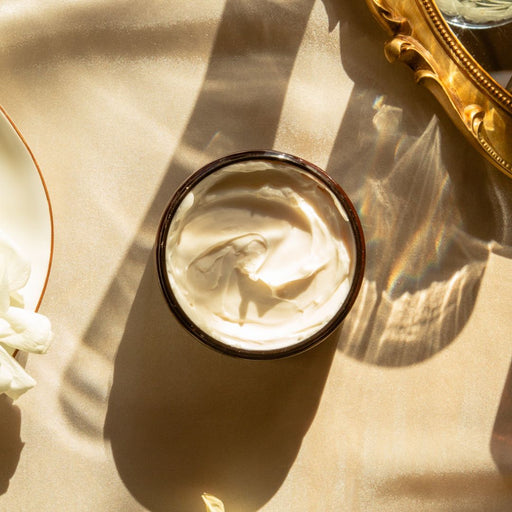
Texture: Buttery, whipped yet fast-absorbing
Color: Cream
Benefits & Features
Features essential fatty acids with omega-rich candlenut, avocado, and carrot seed oils with antioxidant vitamin E and indulgent Illipe butter. Antioxidant and anti-inflammatory ingredients help protect skin from environmental stress, sun damage, and dry climate.
Has a signature hydrating yet non-greasy feel, leaving skin feeling smooth and velvety.
Directions
This product can be used daily for maximum benefits.Warm the desired amount of product in the palm of your hand, letting it warm just slightly, and then massage creme gently into the skin until it is fully absorbed.
Apply generously on freshly cleansed skin or re-apply any time of day for a boost of moisture.
Ingredients
Candlenut Oil: Moisturizes and softens skin with a non-greasy, velvety feel. Rich in linoleic and linolenic acid, candlenut oil moisturizes and helps mend rough, chapped skin.Rice Bran Oil: Maintains elasticity. Rich in natural Vitamin E and essential fatty acids, rice bran oil intensely hydrate and help maintain youthful elasticity.Avocado Oil: Nourishes and calms. Traditionally used in Indonesia, Avocado Oil is richly hydrating and highly soothing.Illipe Butter: Moisturizes and protects. Provides a cushiony barrier to protect skin from dehydration, hard water and harsh elements.All Ingredients: Water/Eau, Cetearyl Ethylhexanoate, Emulsifying Wax NF, Cyclomethicone, Illipe (Shorea stenoptera) Seed Butter, Candlenut (Aleurites moluccana) Oil, Avocado (Persea gratissima) Oil, Stearyl Alcohol, Rice Bran (Oryza sativa) Oil, Dimethicone, Carrot (Daucus Carota sativa) Seed Oil, Potassium Hydroxide, Carbomer, Fragrance/Parfum, Phenoxyethanol, Caprylyl Glycol, Glycerin, Glyceryl Caprylate, Phenypropanol.
“Lorem ipsum dolor sit amet, consectetur adipiscing elit. Nulla quis diam lorem. Praesent auctor dapibus purus, eu facilisis nunc auctor et. In fermentum nunc et est vulputate malesuada.”
There's a reason people talk about their "beauty sleep." Getting enough rest is one of the best ways we can support our skin. We cover the best science-backed ways to support your sleep and, therefore, your skin health.
Key Takeaways
Getting enough sleep is vital for healthy skin, because sleep is when our skin focuses on repair and recovery.
Poor sleep quality or a lack of sleep can undermine that recovery process, causing all kinds of problems.
Research has connected a lack of sleep with loss of skin firmness, elasticity, hydration, and overall dissatisfaction with skin appearance.
One way to support sleep and skin health is with a tailored bedtime routine, including sleep- and skin-supporting skincare products.
Other tips include avoiding blue light, using aromatherapy, maintaining good sleep hygiene, and promoting relaxation before bed.
Metta Murdaya, co-founder of JUARA Skincare, says:
"Sleep is crucial for skin health and overall wellness. While we sleep, our skin enters repair mode. Undermining this recovery period can be detrimental, which is why supporting healthy sleep is so important for skin health."
Sleep plays a vital role in skin health, just as it does with so many other aspects of overall health.
Despite that, insufficient sleep is surprisingly common. According to the CDC, more than one-third of American adults get inadequate sleep, and that figure rises to almost half in some states.¹
If you've ever suffered from a poor night's sleep, you likely know how bad it can feel. But poor sleep can affect your skin health in ways you might not notice at first. Sleep deprivation can cause premature aging, dark circles, dry skin, and many other issues.
In turn, a good night's rest can lead to all kinds of potential benefits, both for overall wellness and skin health. Fortunately, there are many ways you can support your sleep, and therefore your skin.
What Happens When You Fall Asleep
Quality sleep is crucial for maintaining healthy skin. That's because sleep is when your skin enters recovery mode.
Remember, your skin is the largest organ in your body. The outer layer is called the skin barrier. It's responsible for protecting your body from potentially harmful substances, and also helps prevent moisture loss.
"The [skin] barrier is sometimes underestimated," says dermatologist Dr. Arini Widodo, in conversation with JUARA co-founder Metta Murdaya. "Actually, the barrier is very important, because the skin is a living organ that protects our body.… It's the shield toward the environment, the first defense of our body. So we have to make sure our barrier is well protected with good products."
Your skin can't keep up this protective mode forever, though. At some point, it needs to take a well-earned break to rest and recover from any damage it suffered while protecting you.
Your Skin In Repair Mode
When you sleep, your body goes through several subtle changes that help your skin focus on repair and recovery.
As we prepare to fall asleep, production of melatonin, a sleep hormone, increases. You might know melatonin as the hormone that makes us feel sleepy. It also acts as an antioxidant, helping to protect skin cells from damage.
Meanwhile, levels of the stress hormone cortisol decrease. That also helps skin focus on repairing damage.²
Once we fall asleep, our skin truly shifts into repair mode. Skin cell regeneration increases. Blood flow is boosted, providing the nutrients and oxygen needed for recovery.
As one scientific review noted, research suggests that repair of damaged skin cells and production of healthy new cells peak at night.³
Collagen Production
One particularly important part of your skin's repair process is collagen production. During sleep, collagen production increases.
Collagen is a protein. It's abundant in skin, where it provides structure and helps maintain skin elasticity.
How Sleep Deprivation Affects Skin Health
You can likely already see why adequate sleep is important for glowing skin. Not getting enough quality rest undermines your skin's repair process, potentially causing various issues.
Skin Aging
One such issue is premature aging. Aging is inevitable, but not getting sufficient sleep can contribute to that process.
Consider collagen. Our bodies produce less collagen as we age. Not getting enough sleep interrupts the time when collagen production is supposed to naturally increase, which can lead to typical signs of aging skin, like fine lines and wrinkles.⁴
Collagen also plays a crucial role in the health of our skin barrier. Research suggests poor sleep undermines skin barrier health.
For example, one study found that people with high sleep quality recovered skin barrier function 30% better than people who didn't get enough sleep. The study also found that good sleepers perceived their skin's appearance better than people who were sleep deprived.⁵
Another study found that people with late bedtimes had decreased skin firmness, elasticity, and hydration, while also having more wrinkles.⁶
Dark Circles
Perhaps the most well-known signs of sleep deprivation are dark circles under the eyes.
In fact, dark circles aren't always directly caused by bad sleep. They sometimes naturally appear with age and are more common in people with darker skin tones.
Lack of sleep can also contribute to the formation of dark circles. That's because the skin under our eyes is thinner and more delicate than other parts of our skin. Lack of sleep can cause this thinner skin to become pale, making the blood vessels lying underneath more visible.
If you want to target dark circles, consider adding an eye cream to your bedtime routine. JUARA's Miracle Tea Complete Eye Creme blends antioxidant-rich kombucha and turmeric to help protect skin from premature aging and reduce the appearance of lines and wrinkles. Touted as our "miracle eye cream", it's ideal for dark circles and under-eye bags.
Dry Skin
Research suggests our skin loses 25% more moisture overnight compared to the day.⁷
As we mentioned, sleep is crucial for skin barrier repair. And an undermined skin barrier is generally less effective at retaining moisture.
Therefore, a lack of sleep can decrease skin hydration.⁸
Secrets For Beauty Rest (and Healthy Skin)
The solution to these problems might seem obvious: get more sleep. That's often easier said than done.
Fortunately, there are various ways you can help your body get the beauty sleep it (and your skin) needs.
Remember how we explained that our skin loses more hydration overnight? Studies suggest that it is caused, at least in part, by the fact that our skin becomes more permeable at night.⁹
In turn, that makes nighttime an amazing chance to let our skin absorb high-quality, skin-supporting bioactive ingredients. That's why experts often recommend developing a tailored bedtime skincare routine.
Generally, a bedtime routine should begin with a gentle gel cleanser to wash away the day's impurities. JUARA's Sensica Gentle Gel Cleanser contains centella asiatica to help boost collagen, ceramides to support the skin barrier, and sodium hyaluronate for hydration.
Next, a hydrating toner can help balance skin. JUARA's Triple Tea Antioxidant Essence contains three tea extracts for protective antioxidants and hyaluronic acid for intense hydration and healing properties.
Finally, every good bedtime routine should end with a high-quality moisturizer or night cream. The right product should help your skin stay hydrated overnight and can therefore help support your skin's recovery process.
Alternatively, many experts recommend using a thicker night cream before bed. JUARA's Miracle Tea Recovery Creme blends fermented black tea, Spanish lavender extract, and bio-retinol to help your skin reset and renew. If you want to benefit from this bio-retinol, it's best to use it at night, because it can make your skin more sensitive to the sun.
The Miracle Recovery Creme is a "cloudlike but nicely absorbent day and night cream that helps with all skin transitions," says JUARA co-founder Metta Murdaya in conversation with dermatologist Dr Arini Widodo. "It just feels like my skin's resting when I go to sleep."
Supporting Your Circadian Rhythm
Skincare products can help support your skin while you sleep, but you still need to get enough sleep in the first place. Experts generally recommend seven to nine hours every night, though this can vary between individuals.
Our bodies have their own clock, which determines when we feel sleepy and alert. This sleep-wake cycle is called our circadian rhythm.
Ideally, this rhythm happens naturally. But various things can undermine the circadian rhythm.
Stress levels are one common factor. If you've ever lain awake worrying, you know how important it is to try and relax before bed. Meditation, mindfulness, and gentle exercise are a few techniques that might help.
A tailored bedtime skincare routine can also help. First, experts recommend going to bed and waking up at roughly the same time, and sticking to a reliable bedtime routine to signal to our bodies that it's time to wind down.
Second, certain skincare products can actually help you wind down. For example, lavender, like that in JUARA's Miracle Tea Recovery Creme, can help promote relaxation.
"There are studies on lavender that suggest it reduces anxiety and helps you sleep better," explains dermatologist Dr. Arini Widodo, in conversation with JUARA co-founder Metta Murdaya. "A lavender smell gets into our olfactory nerve, within our nose, and then it goes to the limbic system in our brain, where we control our emotions. So it's good for emotional control and reducing anxiety."
Avoid Blue Light
Light can also disrupt our circadian rhythm. When light enters our eyes, our bodies tell our brains to produce less melatonin.
Blue light, like that in sunlight, is particularly disruptive. Try to avoid it in the hours leading up to bed. Many electronic devices produce blue light, so consider adding a filter or turning them off an hour or two before bedtime.
A good night's sleep is crucial for skin health and overall wellness. On the other hand, poor sleep can lead to all kinds of skin problems.
One of the best ways to support your sleep and skin is a tailored bedtime routine. The right routine, with the right products, can help your body prepare for sleep and deliver powerful bioactive ingredients that help your skin repair and recover from the day prior.
Frequently Asked Questions
Does Sleeping Help Clear Skin?
Yes. While we sleep, our skin focuses on repair. Cell turnover, blood flow, collagen production, and other beneficial processes increase, allowing your skin to recover and rejuvenate itself.
Does Lack of Sleep Age Your Skin?
Research suggests sleep deprivation can contribute to premature aging. Poor sleep can cause a loss in skin firmness and elasticity, which can cause many of the signs of aging: wrinkles, lines, sagging, and so on.
Can Lack of Sleep Give You Bad Skin?
Poor sleep affects our skin in many ways. It can undermine recovery, making it more difficult for skin to repair any damage it might have suffered. Lack of sleep can also cause skin to dry out and lose firmness.
Juara Skincare incorporates ancient rituals with Western skincare science, creating the ultimate beauty experience. We aim to transport you from the mundane to the extraordinary with our exotic ingredients, intoxicating scents, and powerful, skin-improving formulas. All of our products are nutrient-rich and botanically based. We are proud to be certified cruelty-free. Get the latest skin care tips and info on Juara products by learning more about our founders and following us on Twitter, Facebook, Instagram, LinkedIn, and Pinterest.
Metta Murdaya
Co-founder and CEO
Metta Murdaya is co-founder and CEO of JUARA Skincare, a skincare and beauty company inspired by the Indonesian wellness traditions of Jamu. Her award-winning book, Jamu Lifestyle, captures the essence of the Jamu philosophy, emphasizing the power of healthy, intentional, and joyful living. Guided by a deep commitment to societal betterment, Metta inspires individuals to thrive in mind, body, and spirit. As a wellness speaker and retreat guide, she contributes to the Global Wellness Institute’s Aesthetic Health Initiative and serves on the board of Mentari, supporting trafficking prevention and education initiatives in Indonesia and wellness programs in the U.S.