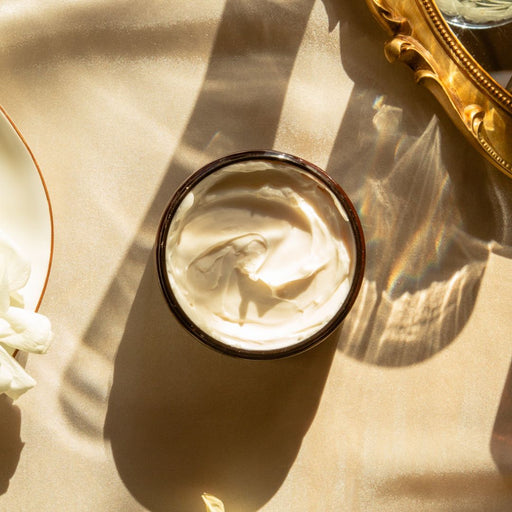
Scent: Fresh and uplifting. Notes of Tiare flower and jasmine with soft magnolia petals, violet leaves, green bamboo, and palm fronds evoke the smell of the dewy tea fields of Indonesia at sunrise.
Texture: Buttery, whipped yet fast-absorbing
Color: Cream
Benefits & Features
Features essential fatty acids with omega-rich candlenut, avocado, and carrot seed oils with antioxidant vitamin E and indulgent Illipe butter. Antioxidant and anti-inflammatory ingredients help protect skin from environmental stress, sun damage, and dry climate.
Has a signature hydrating yet non-greasy feel, leaving skin feeling smooth and velvety.
Directions
This product can be used daily for maximum benefits.Warm the desired amount of product in the palm of your hand, letting it warm just slightly, and then massage creme gently into the skin until it is fully absorbed.
Apply generously on freshly cleansed skin or re-apply any time of day for a boost of moisture.
Ingredients
Candlenut Oil: Moisturizes and softens skin with a non-greasy, velvety feel. Rich in linoleic and linolenic acid, candlenut oil moisturizes and helps mend rough, chapped skin.Rice Bran Oil: Maintains elasticity. Rich in natural Vitamin E and essential fatty acids, rice bran oil intensely hydrate and help maintain youthful elasticity.Avocado Oil: Nourishes and calms. Traditionally used in Indonesia, Avocado Oil is richly hydrating and highly soothing.Illipe Butter: Moisturizes and protects. Provides a cushiony barrier to protect skin from dehydration, hard water and harsh elements.All Ingredients: Water/Eau, Cetearyl Ethylhexanoate, Emulsifying Wax NF, Cyclomethicone, Illipe (Shorea stenoptera) Seed Butter, Candlenut (Aleurites moluccana) Oil, Avocado (Persea gratissima) Oil, Stearyl Alcohol, Rice Bran (Oryza sativa) Oil, Dimethicone, Carrot (Daucus Carota sativa) Seed Oil, Potassium Hydroxide, Carbomer, Fragrance/Parfum, Phenoxyethanol, Caprylyl Glycol, Glycerin, Glyceryl Caprylate, Phenypropanol.
“Lorem ipsum dolor sit amet, consectetur adipiscing elit. Nulla quis diam lorem. Praesent auctor dapibus purus, eu facilisis nunc auctor et. In fermentum nunc et est vulputate malesuada.”
Tamarind is famous for its one-of-a-kind flavor. But did you know it has many potential benefits for skin health and overall wellness, too?
Read on to learn about some of the myriad ways people use tamarind, from cooking to skincare. We also show you how you can incorporate this powerful fruit into your own skincare routine.
Key Takeaways
Tamarind has been used in communities around the world for hundreds, if not thousands, of years.
It's a central ingredient in many iconic drinks, dishes, sauces, candies, and more.
Modern research has confirmed many of tamarind's potential health benefits, which include anti-inflammatory effects and skin-supporting properties.
You can use tamarind to make DIY skincare products or buy a professional, plant-based formulation.
Metta Murdaya, co-founder of JUARA Skincare, says:
"Tamarind is used around the world in cooking, traditional wellness practices, and skincare. It has plenty of potential benefits, including antioxidant and anti-inflammatory properties."
Tamarind might not be so well-known in the West. But in the rest of the world, it's one of the most popular tropical fruits.
Once you become acquainted with tamarind, it's easy to see why. Tamarind's taste is unique. It's a wonderful blend of sweet and sour that's almost hard to describe.
Of course, plenty of fruits have wonderful tastes. That alone isn't enough to make tamarind so special.
For centuries, many cultures around the world have used tamarind in traditional healing and wellness practices. It was used to support digestion and blood sugar levels, among other things.
"Tamarind is an ingredient that's been used in Indonesia in our cooking," explains JUARA co-founder Metta Murdaya in conversation with dermatologist Dr. Arini Widodo. "We also use it in our Jamu, which is … very good for your digestion."
Modern research has confirmed many of tamarind's potential benefits. It's a great source of antioxidants and has anti-inflammatory effects.
These attributes also make tamarind a potent ingredient in skincare.
Before we dive into some specific uses for tamarind, we need to take a moment to explore exactly what makes it so special.
Tamarindus Indica
Tamarind comes from the Tamarindus indicatree. It's native to tropical Africa, but is cultivated around the world.
The tamarind tree is truly impressive. It can grow up to 100 feet tall and has distinctive, feathery leaves.
Tamarinds themselves grow in long brown casings called tamarind pods. Inside the shell is a sticky pulp, which itself contains hard seeds.
Tamarind pulp is what we're after. When the fruit is young, it's known as sour tamarind. As it ripens, it becomes sweet tamarind. The sweetness comes from natural sugars that balance out the sour flavor, resulting in that unique sweet-sour tangy flavor that makes tamarind so beloved.
Potential Health Benefits of Tamarind
As we mentioned, taste is far from the only secret behind tamarind's success. Modern research has confirmed several potential health benefits.
First, tamarind is a great source of antioxidants. It contains polyphenols, tannins, and flavonoids, all of which can help protect your body from oxidative stress. Some of these potent compounds are found in the inedible parts of the fruit, but they can be extracted and used in skincare products.
Tamarind is also believed to have anti-inflammatory effects. Research suggests that these effects stem from compounds like the antioxidants we mentioned, plus others like alkaloids and saponins.
Communities around the world have long used tamarind to support digestion. Tamarind pulp is packed with healthy fiber, which is important for digestive tract health. It also contains tartaric acid, which can enhance digestive enzymes.
One compound that can be extracted from tamarind is tamarind seed polysaccharide. Research has shown it can lower blood sugar levels.
You can probably see why tamarind is so widely prized. It's incredibly versatile, with plenty of different potential benefits. We could fill a whole book with all of the ways people use it.
To keep things manageable, we'll separate things into two categories. First, we'll discuss the ways tamarind can be used in skincare. Then we'll cover some of the many ways it's used in cooking.
#1. Tamarind Face Mask
Tamarind can be easily transformed into a potent face mask. Remember, it's packed with antioxidants, which help protect against damage caused by free radicals. It's also filled with compounds that have anti-inflammatory properties.
We noted that tamarind also contains tartaric acid. In fact, it contains several alpha-hydroxy acids. These acids are widely used in skincare.
Alpha-hydroxy acids, or AHAs, are often used to exfoliate skin. They may also help support a bright and even skin tone, enhance blood flow, and improve the appearance of fine lines.
All that makes for a fantastic face mask. However, you can't just spread tamarind pulp right onto your skin. You need a few other ingredients.
The simplest tamarind face mask involves just one other ingredient. Combine tamarind with an equal part of yogurt or honey. If you'd like, you could add additional skin-supporting ingredients, like rose water or turmeric.
Once you've mixed up your mask, spread it evenly on your face and wait for about 15 minutes. Then rinse everything off with water.
If you've never tried using a tamarind face mask before, make sure to spot test it. Dab a little on your inner arm and wait for a bit to make sure your skin doesn't react badly.
#2. Tamarind Toner
You can also infuse water with tamarind to create a DIY tamarind toner. In cooking, we might call this tamarind water.
Making this is simple. You'll need some tamarind pulp, ideally without any seeds. Add the pulp to some warm water and let it steep for at least 10 minutes.
Once the water has become infused, strain out all the solids. You'll be left with an all-natural toner. Use a cotton pad or bud to apply it to your skin.
Tamarind has astringent properties. That means it may help make pores appear smaller and skin look tighter.
Note that this toner will likely be quite strong. As with the mask, make sure to spot test before applying it to sensitive skin.
#3. Tamarind Exfoliator
We've used tamarind to make a mask and a toner. Why not an exfoliator?
Remember, tamarind is packed with alpha-hydroxy acids, which are fantastic chemical exfoliators. We can combine them with a natural physical exfoliator for an at-home exfoliation product.
You can use your preferred natural compound for the physical component. One good choice is powdered sugar. Combine the sugar, tamarind pulp, and enough natural oil for the mixture to have the consistency you desire.
Exfoliation provides many potential benefits. It helps remove excess dead skin cells, which may otherwise clog pores, cause ingrown hairs, and promote the growth of acne.
Proper exfoliation can leave skin looking smoother, softer, and more even. It also helps your skin absorb other skincare products.
Make sure to apply it gently. Massage it into your skin using gentle, circular motions. Use only light pressure to avoid damaging your skin.
#4. Tamarind Paste
When it comes to cooking, the quintessential form of tamarind is tamarind paste. It's made by dissolving the pulp in water and straining out the seeds and fiber.
Tamarind paste forms the backbone of many iconic savory dishes, like pad thai. It's also a central component of flavorful sauces, like Worcestershire sauce.
An even more intense version of tamarind paste is tamarind concentrate. It's shelf-stable, which makes it a great addition to your pantry. You can use it as a glaze or mix it with water to make a cooking liquid or dipping sauce.
#5. Tamarind Sauce
Speaking of sauce, tamarind sauce is another classic use for tamarind. We already mentioned Worcestershire sauce, which is made using tamarind. But that's far from the only example.
In India, street food is often served with imli chutney, a delicious tamarind-based sauce that's sweet and tangy. And in Mexico, tamarind sauces are used to glaze meats, dress salads, and as the base for a type of fruit slushy called chamoyadas.
Chamoyadas are often topped with a tamarind candy straw. Tamarind candies are extremely popular, both in Mexico and around the world. So are tamarind juices.
#6. Tamarind Powder
Many spices come in powdered form. Tamarind is no exception.
But tamarind powder has more uses than you might expect. Of course, you can add it to your cooking, just like other spice powders. It can also be added to drinks, used to make sweets, rubbed into meat or sprinkled on fruits, mixed into sauces and marinades... the list goes on.
Where to Get Skincare Products With Tamarind
If you've read all of that and want to add tamarind to your skincare and wellness routine, look no further than JUARA's Triple Tea Antioxidant Essence. It contains tamarind seed extract, which can help boost skin hydration, enhance elasticity, and smooth out skin texture.
The tamarind extract is blended with other potent plant-based ingredients. Tea extracts provide additional antioxidants, help balance pH, and soothe skin irritation. Rice bran extract is a great source of vitamin B, which can help reduce the appearance of redness.
"Tamarind seed extract has oil-free hydrating properties," notes JUARA co-founder Metta Murdaya in conversation with dermatologist Dr. Arini Widodo. "Think of it as a natural hyaluronic acid."
Conclusion
Tamarind is a truly versatile fruit. It's widely used in cooking, forming the base of iconic meals, drinks, sweets, and sauces around the world. It has many potential benefits, making it a potent ingredient in natural skincare products, whether it be a skin cream or a body scrub.
Frequently Asked Questions
What Are the 5 Benefits of Tamarind?
10 potential benefits of tamarind include: protection against environmental stressors, anti-inflammatory properties, pore tightening, exfoliation, and reducing the appearance of fine lines.
What Does Tamarind Do to Your Body?
Tamarind is packed with healthy fiber and nutrients. It's widely used to support digestion, has anti-inflammatory properties, and is a potent source of antioxidants.
Can You Eat Tamarind Raw?
Yes, plenty of people eat tamarind directly from the tamarind pod. It has a chewy texture, kind of like a date. Just make sure to avoid eating the stringy fiber or seeds!
Juara Skincare incorporates ancient rituals with Western skincare science, creating the ultimate beauty experience. We aim to transport you from the mundane to the extraordinary with our exotic ingredients, intoxicating scents, and powerful, skin-improving formulas. All of our products are nutrient-rich and botanically based. We are proud to be certified cruelty-free. Get the latest skin care tips and info on Juara products by learning more about our founders and following us on Twitter, Facebook, Instagram, LinkedIn, and Pinterest.
Metta Murdaya
Co-founder and CEO
Metta Murdaya is co-founder and CEO of JUARA Skincare, a skincare and beauty company inspired by the Indonesian wellness traditions of Jamu. Her award-winning book, Jamu Lifestyle, captures the essence of the Jamu philosophy, emphasizing the power of healthy, intentional, and joyful living. Guided by a deep commitment to societal betterment, Metta inspires individuals to thrive in mind, body, and spirit. As a wellness speaker and retreat guide, she contributes to the Global Wellness Institute’s Aesthetic Health Initiative and serves on the board of Mentari, supporting trafficking prevention and education initiatives in Indonesia and wellness programs in the U.S.